Single vs. Double Spacing
OK, I fully expect this to be the post that breaks the internet – right next to one coming up on SLUGLINES – but nevertheless, here we go….
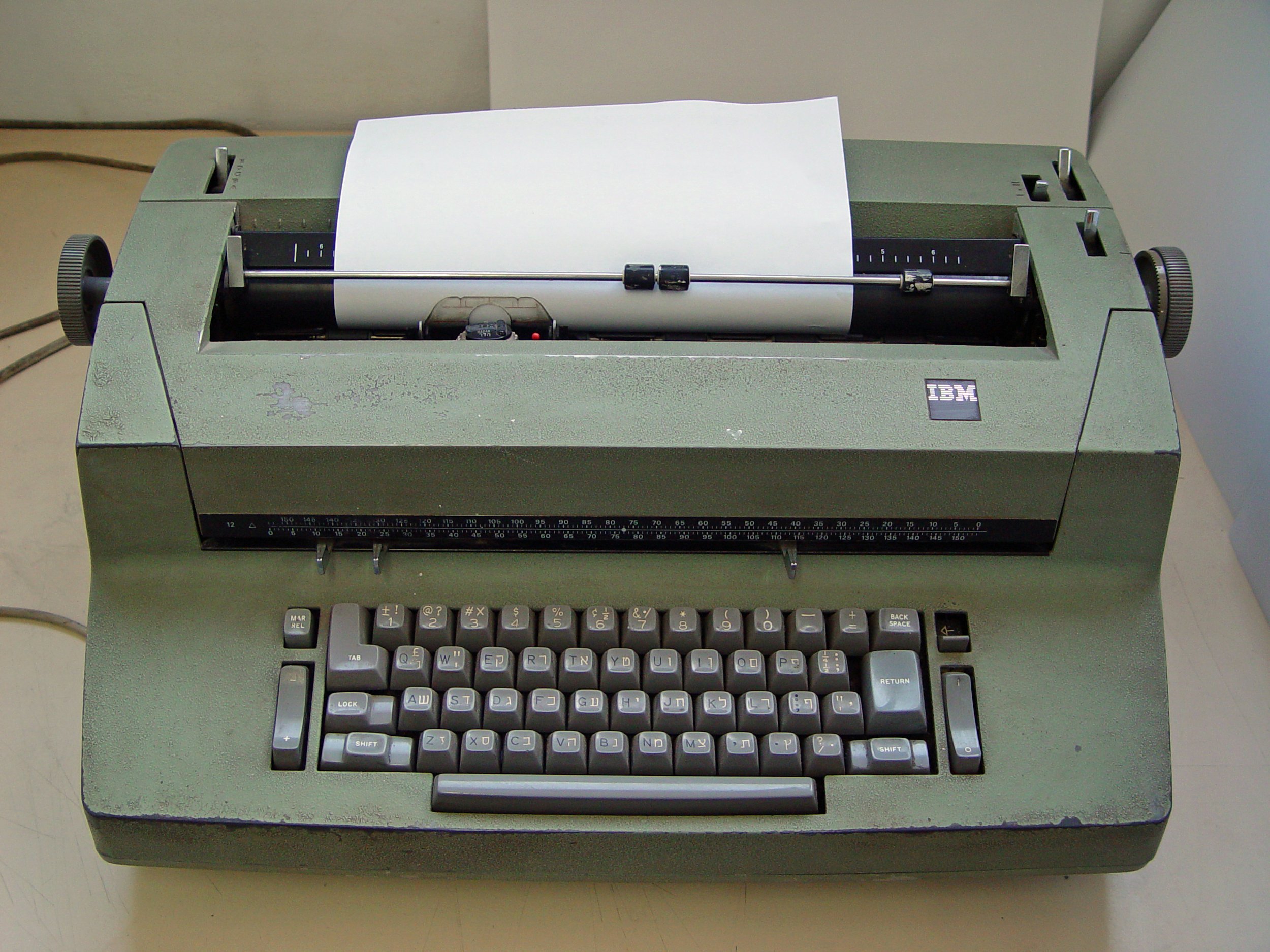
IBM Selectric II
Back in my day, I learned to type in school on an IBM Selectric Typewriter. The clicking, clacking keyboard and hum of the electric motors of ancient machines was better than any white noise machine. We were taught how to type with two hands -- no henpecking and searching around on the keyboard. You learned finger placement and punctuation. The right way. The good way. The American way.
History
In the early days of screenplays, two spaces after a period was commonplace as most scripts were typed BEFORE word processors and proportional spacing. (Single vs. double spaced started WAY before the history of typewriters, but we're talking about screenplays here…)
Scripts were typed on typewriters that used MONOSPACE font – which means every letter got the same amount of fixed space. But in 1941, PROPORTIONAL fonts on IBM typewriters squeezed more letters into the “grid” thus changing the typeface wars forever. Kerning (the spacing between individual letters) and other typeface attributes allow for an easier read and have varying glyph sizes and spacing. Note the double spaces in this 1920 example here:
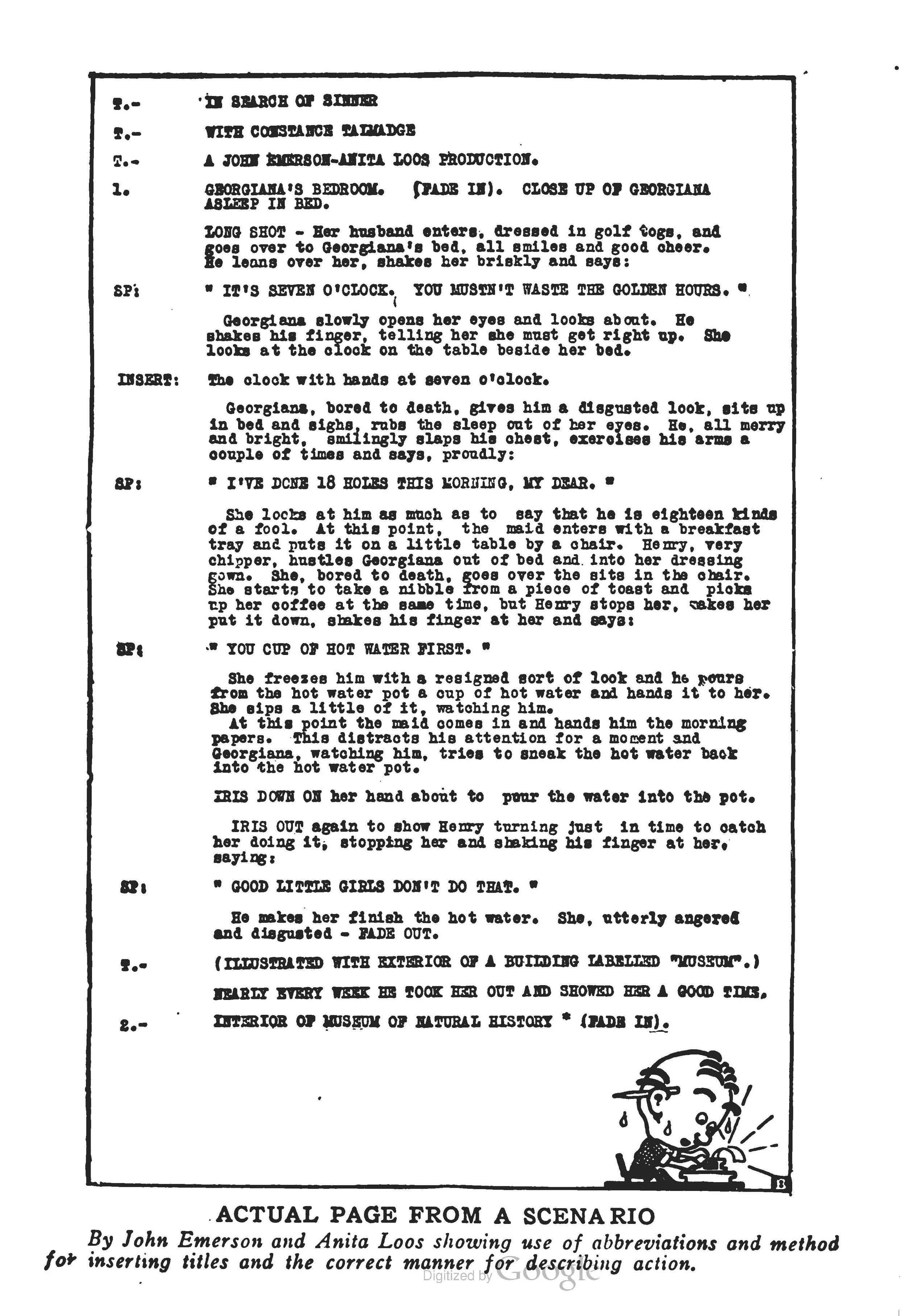
From John Emerson and Anita Loos 1920s book “How to Write Photoplays”
Courier, 12pt is the default font and one most commonly used in Final Draft or other screenwriting software. There are other versions of Courier – Prime, New, etc… But all of them are still MONOSPACE slab serif typeface. Serifs are those fancy doodads on letters you can see here:
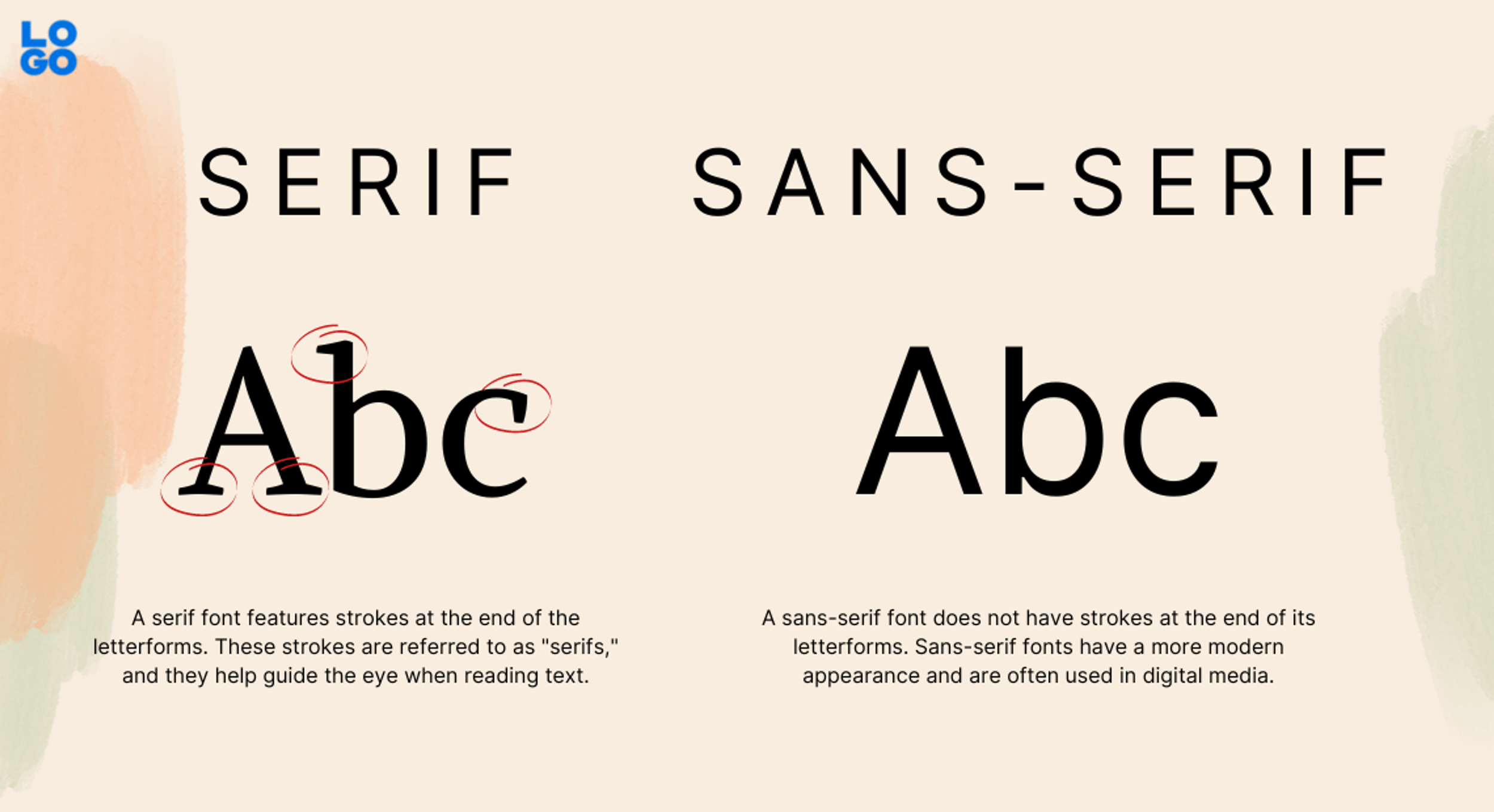
From Logo.com
Courier was designed in 1956 by Howard “Bud” Kettler specifically for IBM typewriters. Bud meant to call it Messenger, not Courier, but then changed his mind saying, “A letter can be just an ordinary messenger, or it can be the courier, which radiates dignity, prestige, and stability.” Beautiful sentiment aside, IBM didn't trademark the Courier font, so it became public domain. Computer coders picked up on Courier because of its consistency to line up neatly in their code. Today’s Courier fonts allow for the proportional kerning (that’s that spacing thing we talked about) so you don’t NEED the extra space to discern where a sentence starts and stops. “But Julie, you said monospace fonts need double spacing because each space takes up the same amount of room, ergo, TWO spaces help showcase the sentence better.” Yes… and no. Our eyes have adjusted to digital processing fonts and kerning, and although Courier is still monospace, we perceive text easier because we see the full WORDS rather than just L E T T E R S our brain must PROCESS into words.
And if you don’t believe me, how about the US government? OK, potentially questionable example, but in the 1967 style guide, the US gov allowed for single spacing for the first time ever, changing decades of double space monarchy.
Script Breakdown
Confused yet? Great! Let’s keep going!
A script page is about a minute of footage, give or take. So long as your margins are in the proper format – top and bottom 1 inch, left and right 1.5 inches. And you shouldn’t be cheating those margins!
(A) For timing purposes this is the standard for that 1 min per page to work.
(B) You need that space especially on the right for pages numbers, revision marks, and scene numbers. Those fall in those margins, so don’t squeeze them out!
Courier in Final Draft allows for 54-56 lines (with margin space), essentially 6-7 lines per inch of page. A Script Supervisor (Scripty) on set breaks down a screenplay in 1/8s of a page, which is about 7 lines on a page so that math… maths.
But you’re saying, “I’m a writer who was promised there’d be no math. What’s this got to do with single vs double spacing?” Well, take for example: Shawna and I wrote a 45 page script for our first draft of a one-hour Wu Assassins episode. The showrunner, John Wirth, with decades of writing experience raised his eyebrows at us and handed it back. “Add a scene or something, it’s not long enough.” We insisted the fight scenes were going to make it come in on time, but we were good soldiers and did what we said. Meanwhile, John heard us and secretly had the Scripty time out our 45-page opus and guess what? It came in on time, to the minute. We ended up removing the added scenes and moved on.
All that is to say, the one-page-per-minute mantra can be true but also depends on the director, the speed of dialogue, or the amount of action… So, there are a couple of factors here besides just general obstinance to either change from using 2 spaces or move toward them. Why do we care about page length? Well, because when I took a couple of my single spaced scripts and made them double spaced, and guess what? It added a page or more to the total script EACH TIME! So, why do we care? Because time is money.
Listen, I used to live and die by two spaces, but begrudgingly moved to one. But honestly, when I was script coordinating, things that made a bigger difference in readability and page count weren’t so much spacing issues so much as writers cheating the margins or spacing between action/slugs/dialogue on the page. That will definitely screw up a Scripty’s timing, so don’t waste their time trying to be clever. If you’re cheating to make your script come in on time, kill some darlings. And don’t get mad at your script coordinator for “fixing” your oversight -- they’re trying to help production run smoothly otherwise you’ll get the call to fix it later.
What’s the Verdict?
Single spacing is preferred and suggested in every major style guide, but they allow for double space wiggle room. Styles, like languages, are a constantly changing and adapting. They’re living, breathing, things. We have to go with the flow – Ok, Boomer? I’m looking at you, too, fellow Gen Xers. Digging in your heels on this one is a matter of choice, sure, but it reeks of defiance in a sort of, “But this is always how it was done before!” kind of way. That being said, one of the best TV shows (IMHO), “Better Call Saul”, used double spaces in their scripts. (Trust me, I read a bunch and checked.) A clear case of your mileage may vary (YMMV). What truly matters is the material and consistency.